This is the second part of a four-part series that has come from the 2024 and 2025 AusSTS conferences.
Indigenous design methods achieve the types of holistic outcomes many dream of when entering disciplines with a mission to engineer and build in environmentally and socially better ways. Better still – these methods are available for all to learn.
Dr Cat Kutay (Yugambeh) is Senior Lecturer in Information Technology, Faculty of Science and Technology, Information Technology, Charles Darwin University and Fellow of Bandalang Indigenous design studio at ANU. Dr Kutay offered a way to understand how to engage with Indigenous – and therefore intergenerationally proven – design methods at the Australasian Science and Technology Studies Conference (AusSTS) in Canberra, 18-20 November, 2024.
The conference theme was (De-)Territorialising STS: Discipline, Place, Power. Dr Kutay used ants as one of many Country-centred examples to highlight an Indigenous-led engineering design and development process emerging from their research. However, this presentation about an Indigenous-centred engineering design and development process, titled ‘Listening to the Ants’ was programmed in a session of presentations about Actor Network Theory (ANT), misunderstanding First Nations ontology and epistemologies. It is apt then, that the way into Indigenous design methods demonstrated by Dr Kutay, is learning to listen.
This decoloyarn is an edited version of Dr Kutay’s presentation. You are invited to share it and think about it within the context of your own (broadly defined) design work.
*
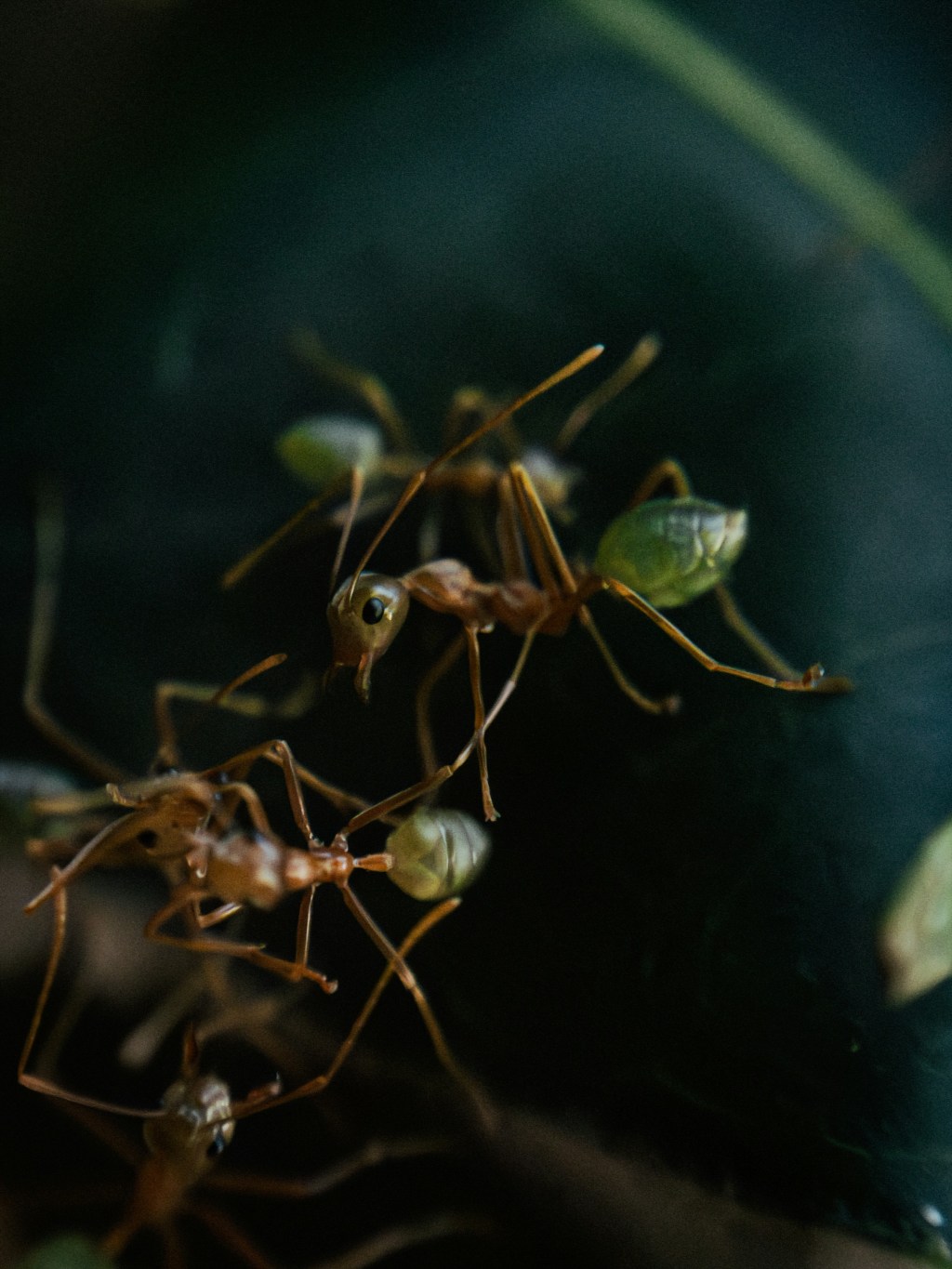
There are different ants in different areas of the continent. All ants bite what threatens them. In the NT, we have green ants with a vicious bite. Like other ants, they build nests from local materials. Sensibly, ants living in wet country build higher off the ground, while those in dry country build on the ground.
Over millennia, humans on the continent now known as Australia also adapted to the different environments, landscapes, landforms and vegetation. In the spirit of research and developing new scientific knowledge, lets update the process for engineering design to incorporate First Nations perspectives, such as generosity and inclusion to produce flexible portable artefact designs. Such technology respects country, and all in it as equally animate, reducing the pressure on country locally. We describe the phases of this engineering design and development process (Figure 1).
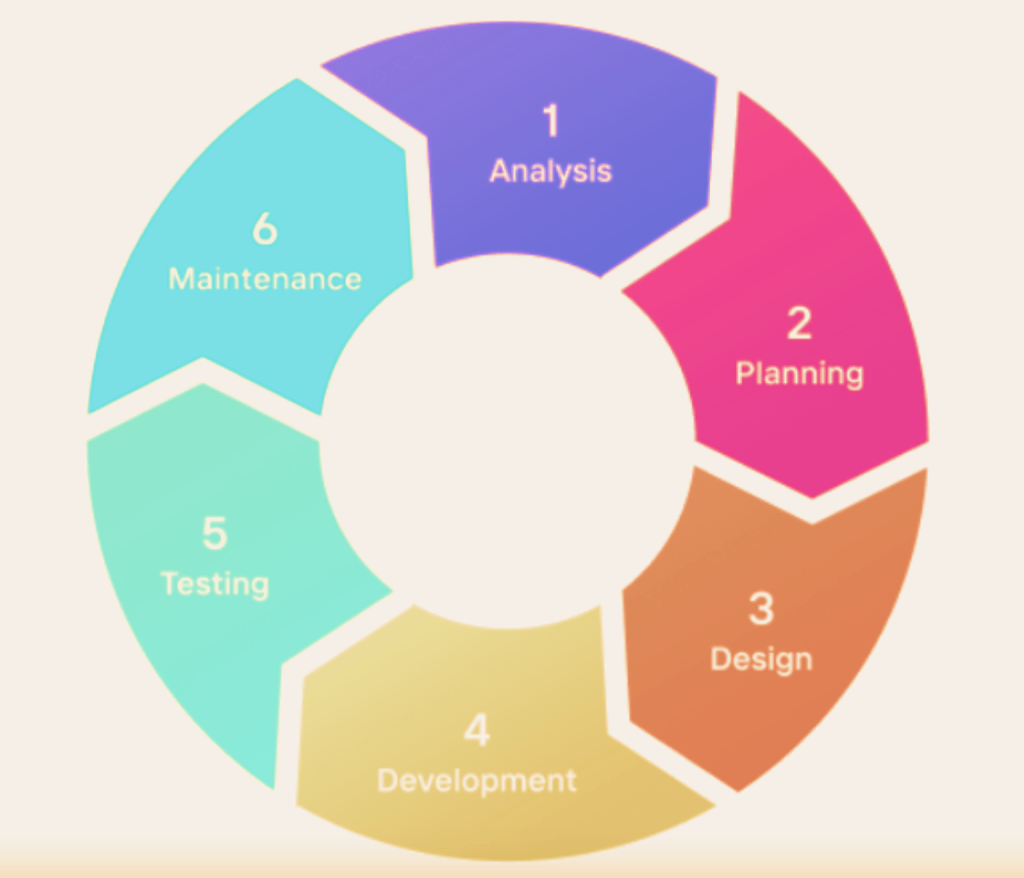
Figure 1. Engineering Design and Development Process
1. Analysis of Science and Technology
All sciences and technologies are built on acculturated theories. For First Nations peoples, the wisdom of our ancestors is embodied in our science and technology. We respect this wisdom, developed on this continent, for its ability to stand the test of time.
2. Planning for the future
First Nations have always promoted generosity and inclusion. We aspire to share our knowledge and our way of living, as we value community first. We have simple, technical solutions that embody millennia of caring for country devised by First Nations in Australia.
3. Design practice
Three main design development practices exist in Indigenous engineering:
1. Prediction: This is like the ants who know when the rain is coming and when they will be flooded. Western science can rarely predict these events.
2. Augmentation: During a drought, Baiame came to the Brewarrina to show the Elders how to make rain. The Dreaming story tells of a corroboree that caused the dust to rise higher than the moon, thus seeding the clouds by spreading particles in the air to help raindrops form.
3. Creation: Putuparri and the Rainmakers provides an example of rainmaking from clear skies in the Western Desert. These examples are well known regionally and respected for their depth of knowledge, and respect for, country.
4. Development
An important factor in reclaiming First Nations science is reliance on local knowledge. The emphasis is not on finding patterns that traverse space, but instead understanding local patterns in depth. This is shared in our Dreaming stories, knowledge that was ignored and silenced as our languages were silenced.
Recently there have been successful efforts to align western understandings with the history and knowledge embedded in the Dreaming stories. This type of work will require the development of new engineering and design language.
5. Testing
The scientific knowledge in Dreaming stories are testable, internally and externally. Internally, the stories remain robust, retaining their structure and content over millennia. Often these stories have similar features, for example, across Australia the serpent Biaime is often the creator of rivers. Externally we can relate our stories to western narratives of science and history
We thus developed a collective knowledge, one that can be shared and re-tested as climate and landscape change. This is a science based on observation and experience, including all people’s experiences, and filters out ideas that do not relate to country’s well-being. Knowledge is taught as needed to know, ensuring its relevance to the listener. When an elder shares their knowledge with those coming after them, the conceptual and the practical are merged, allowing our people to, for example, influence the weather.
6. Maintenance
Knowledge is maintained through oral sharing processes. Children are introduced to general concepts through overarching narratives in Dreaming stories. Over time, the relevant key indicators of the stories, be they of country or society, are filled out, expanding the listener’s knowledge of the relevant indicators, sharing ever deeper knowledge to care for country.
There is ongoing frustration that respect only comes when western scientists confirm sequences and facts we know from our knowledge systems to be pure. It is important that our methods of knowledge sharing and maintenance are respected in and of themselves. For dreaming stories do not hold knowledge just about country, but also about how humans govern and how we can live together in a more respectful way.
First Nations knowledges view country as an animate system; First Engineers recognised all around as living. Only the manufactured was inanimate and not attributed with intelligence. These understandings need to be part of contemporary engineering processes.
Jason Ford (Ngemba) from Brewarrina, an expert in Nation Building and water management, often drives the local school bus. He asks the students, which is the higher order, the ant or you? The children answer “us”. He points out that the ants know what to do each day, how to get food, how to find their way home, what to do when there is heavy rain coming, but children need to be told all the time.
If we adopted First Nations perspectives would we then collectively grow, and respect and trust each other more while placing less value in the inanimate?
*
Where to from here? Want a quick hit of some cool Indigenous design and engineering? Then check out 5 Engineering feats you should know about.
If you’ve got a bit more time, look at Design: Building on Country by Page & Memmott (2021) from the First Knowledges series edited by Margo Neale.
You’ve got the ‘bug’? Dive into Dr Kutay’s Indigenous Engineering for an Enduring Culture.
Want to know more about ants? Get outside and watch some. Do be sure to avoid those green ants tho’!
Image credit: Photo by Sam Ladley
Citation: Kutay, C. (2025, November 3), Listening to the Ants: decolonial design methods, in, Decoloyarns, <URL>

 Decoloyarns